





0.25 CIP Points


El Niño: The next test for insurers
As a strengthening El Niño redistributes climate risk across Asia-Pacific, insurers face shifting claims, widening protection gaps and mounting pressure to refine models, pricing, resilience and customer support strategies now. By Anna Lopata - ANZIIF senior writer Four years ago,...
 10 Aug 2026

 5 mins read
Summary
In short
- El Niño shifts rather than removes risk, increasing the likelihood of heat, drought and bushfire in some markets while altering typhoon and flood exposure elsewhere.
- Insurers must prepare for indirect losses, including repair delays, energy disruption, agricultural damage, reduced productivity and business interruption.
- Historical claims remain valuable, but forward-looking climate data and closer monitoring of portfolio accumulations are increasingly important.
- Closing Asia-Pacific’s protection gap will require mitigation, insurance innovation and stronger partnerships between insurers, governments and communities.
As a strengthening El Niño redistributes climate risk across Asia-Pacific, insurers face shifting claims, widening protection gaps and mounting pressure to refine models, pricing, resilience and customer support strategies now.
By Anna Lopata – ANZIIF senior writer
Four years ago, insurers across Australia were dealing with the wettest phase of the climate cycle. Consecutive La Niña events brought destructive floods, saturated catchments and thousands of weather-related claims.
The next test looks very different and will likely be characterised by fire, heat and drought.
El Niño is firmly established and strengthening across the tropical Pacific. Australia’s Bureau of Meteorology expects the event to peak in late spring or summer while the US National Oceanic and Atmospheric Administration (NOAA) says it is highly likely to persist into early 2027. But insurers know better than to focus on the climate signal alone.
Unlike La Niña, which tends to concentrate attention on flooding and severe storms, El Niño redistributes risk.
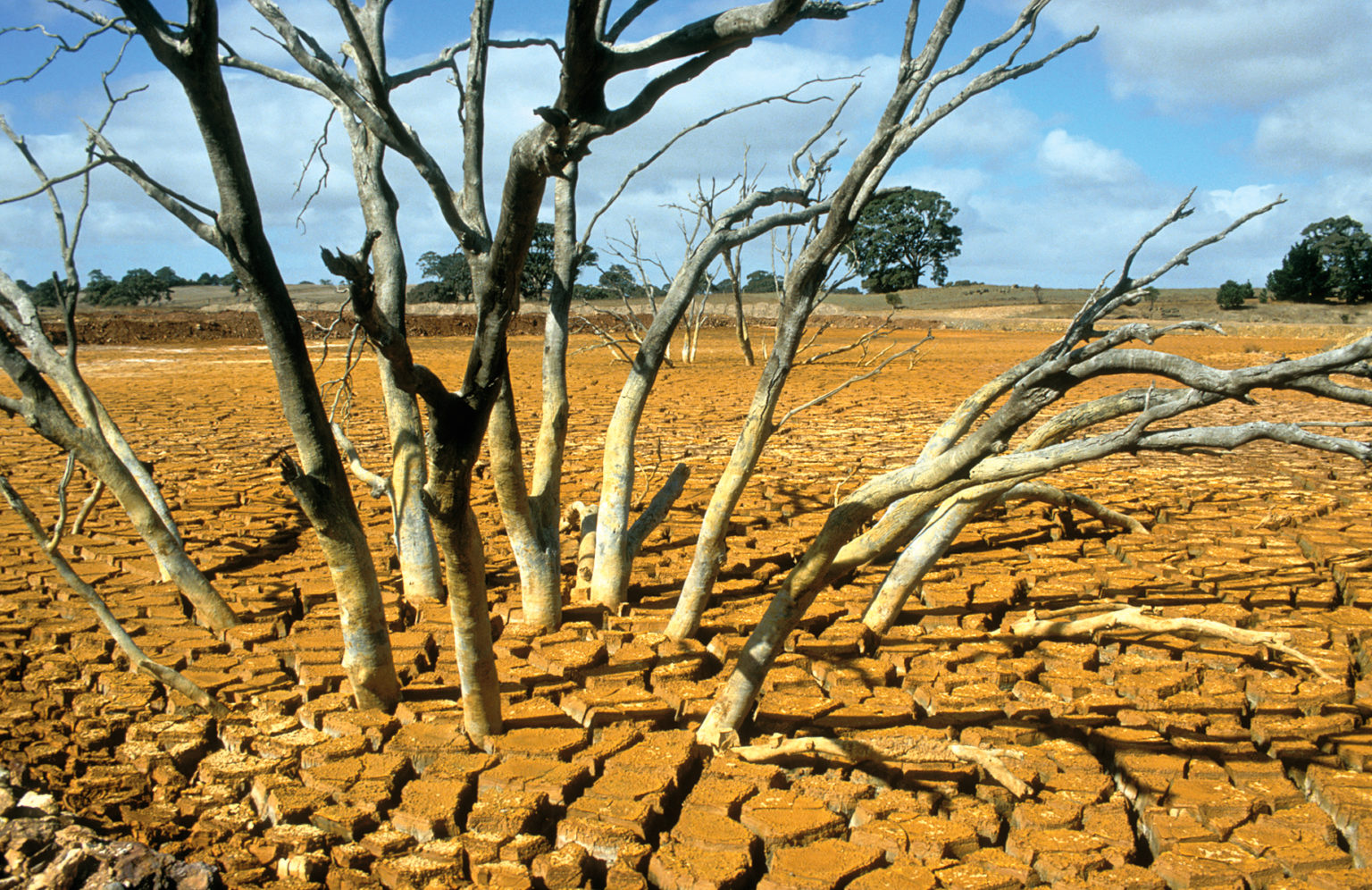
Bushfire danger increases across parts of Australia. Drought places pressure on agriculture and water supplies. Heatwaves disrupt infrastructure, energy systems and businesses.
Elsewhere in Asia-Pacific, the picture shifts again, with changing typhoon activity, flood exposure and agricultural impacts depending on the region.
The challenge is not simply preparing for a different hazard. It is recognising that losses may emerge in different places, through different insurance classes and in less obvious ways than before.
For insurers, that means looking beyond the forecast. Historical claims data remains essential, but understanding how risk is changing has become just as important as understanding where it has been. As climate cycles unfold against a warmer and more heavily exposed world, El Niño is becoming less a weather story than a test of the industry’s ability to adapt.
A different pattern of loss
El Niño develops when the central and eastern Pacific Ocean becomes warmer than average, altering weather patterns across much of the world. While Australia’s risk often shifts towards heat, drought and bushfire, other Asia-Pacific markets may face higher exposure to typhoons, flooding or water shortages.
Currently, the predictions for Australia’s 2026 winter and spring outlook points to below-average rainfall across parts of southern and eastern Australia and above-average temperatures across most of the country. (Bureau of Meteorology)
However, drier seasons do not rule out severe storms or floods. El Niño changes probabilities, not certainties, and other drivers, including the Indian Ocean Dipole, local sea temperatures and longer-term warming, continue to shape Australian conditions. (Bureau of Meteorology)
Across South-East Asia, El Niño typically increases the likelihood of drier-than-average conditions, particularly across much of the Maritime Continent. That can place water supplies, agriculture and energy generation under pressure while increasing the risk of peat and forest fires and the transboundary haze they produce. (ASEAN Smart Cities Network)
The picture changes again farther north. El Niño can alter tropical cyclone tracks and activity across the western North Pacific, changing exposure for markets including Japan, Korea, the Philippines and coastal China. Some parts of southern and eastern China may also experience above-average rainfall and greater flood potential.
The World Meteorological Organization warns that the strengthening event raises the likelihood of heatwaves, droughts and heavy rainfall in different parts of the world. Its message is not that every region will suffer the same event, but that seasonal risks are being rearranged. (World Meteorological Organization)
Diversification by geography does not remove that exposure. It may simply change where losses emerge.
The hidden costs of heat
Bushfires often dominate discussion of El Niño, but they are only part of the insurance story.
Prolonged heat and drought can disrupt electricity systems, transport networks, construction, agriculture and industrial operations without producing the concentrated physical damage associated with a cyclone or flood. Those pressures can still find their way into claims.
A heatwave may reduce safe working hours and slow rebuilding. Drought can affect water availability, crop yields and livestock. Power interruptions may stop production or damage temperature-sensitive goods.
Roads and rail systems can fail or operate at reduced capacity. When several regions are affected, demand for contractors, materials and replacement equipment can rise at the same time.
That can mean longer repair periods, higher settlements and growing frustration for customers already displaced from homes or unable to reopen businesses.
Munich Re points to research showing that 10 additional days above 35°C can reduce annual labour productivity by an average of 0.3 per cent, an impact comparable with a 5 per cent increase in energy prices.
The financial consequences of heat are often driven less by direct property damage than by production stoppages, infrastructure failures, transport disruption and crop losses. (Munich Re)
This broadens the exposure well beyond property insurance. Agriculture, marine, energy, travel, health, workers’ compensation and business interruption portfolios may all be affected, sometimes without a single clearly defined catastrophe event.
Claims teams may also encounter more complicated questions of causation. A factory shutdown could follow a power failure rather than physical damage at the premises.
A delayed construction project may reflect heat restrictions, material shortages and transport disruption. A food producer may face several connected losses across crops, refrigeration and distribution. It’s important to keep in mind that the claims pathways becomes harder to isolate.
Claims, pricing and models
Historical claims data remains fundamental to underwriting and catastrophe modelling. But an El Niño event unfolding against a warmer climate cannot be treated as a direct repeat of an earlier cycle.
Changes in population, property values, land use and development have altered the exposure beneath the hazard. Construction and repair costs have also risen, while critical infrastructure and supply chains have become more interconnected.
Swiss Re Institute says rising exposure is a major driver of natural catastrophe losses. It also notes that secondary perils—including wildfires, floods and severe convective storms—can produce heavy aggregate losses even in years without a dominant peak catastrophe. (Swiss Re)
For insurers, this increases the importance of examining accumulations that may once have appeared manageable.
A regional drought can affect agriculture, food processing, energy and transport simultaneously. Bushfires may damage fewer buildings than a major urban flood but strike high-value communities or critical infrastructure. A typhoon that misses one established concentration of exposure may follow a less familiar track into another.
Models cannot remove that uncertainty, but they can help insurers test it.
Scenario analysis should include combinations of perils and indirect consequences, not just expected physical damage. Insurers may need to review business interruption values, supplier dependencies, reinstatement periods and the availability of specialist labour and materials.
Underwriters also need to distinguish between the broad El Niño signal and the local risk. The Bureau stresses that long-range forecasts, not ENSO status alone, provide the best guide to likely Australian conditions.
That distinction matters in customer communication. El Niño does not guarantee that a particular property will burn, a crop will fail or a region will remain dry. Overstating the connection could undermine trust; ignoring it could leave customers poorly prepared.
A region carrying most losses alone
Asia-Pacific enters this El Niño with one of the world’s largest natural catastrophe protection gaps.
Munich Re estimates that natural disasters have caused US$2.4 trillion in losses across the region since 1980, with 88 per cent uninsured. Its 2025 figures put regional economic losses at about US$73 billion, of which only US$9 billion was insured. (Munich Re)
Swiss Re Institute’s analysis of Asia found an even wider gap in 2025: just 8 per cent of economic losses were insured. The burden was particularly heavy in emerging markets, where affordability, access and weaker insurance systems continue to limit protection. (Swiss Re)
These figures matter because uninsured losses do not disappear. They fall to households, businesses, communities and governments, often delaying recovery and increasing pressure on public finances.
El Niño can widen that divide. Drought, extreme heat, crop losses and reduced productivity are difficult to insure comprehensively, particularly where businesses are small, informal or already operating on narrow margins.
Repricing alone cannot close the gap. Where the underlying physical risk continues to rise, higher premiums may protect underwriting results while pushing cover further beyond the reach of those who need it.
Closing the protection gap
The more sustainable response begins before a claim occurs.
Stronger building standards, better land-use planning, fuel reduction, flood mitigation and investment in critical infrastructure can reduce both the probability and severity of future losses.
These measures also help insurers remain in markets where repeated catastrophes might otherwise threaten affordability and capacity.
In Australia, severe weather since 2022 has produced A$15.4 billion in insured losses and an estimated A$28 billion in economic costs. Yet investment through the federal Disaster Ready Fund has amounted to only A$1 for every A$39 lost, according to the Insurance Council of Australia. (Insurance Council of Australia)
Across the Pacific and South-East Asia, governments are also moving towards pre-arranged disaster finance rather than relying entirely on post-event assistance.
The Asian Development Bank says stronger risk layering, better data and more coordinated financial systems are needed to ensure funds reach affected communities quickly. Its 2026 study of Pacific disaster financing identifies sovereign risk transfer, contingent funding and regional insurance arrangements as part of that mix. (Asian Development Bank)
In Laos, a sovereign policy issued through the Southeast Asia Disaster Risk Insurance Facility provides up to US$16 million for floods, cyclones, earthquakes and landslides. Its impact-based trigger enabled a US$2 million payment in September 2025, six business days after more than 300,000 people were reported affected by disasters. (World Bank)
Parametric insurance can also support farmers, businesses and governments where traditional cover is unavailable or slow to respond. Rather than waiting for individual loss assessment, it pays a fixed amount when an agreed measure, such as temperature, rainfall, wind speed or crop yield, crosses a specified threshold. (Munich Re)
It is not a replacement for indemnity insurance. Poorly designed triggers can leave a policyholder with a loss but no payment, or a payment that does not match the damage. Used carefully, however, parametric cover can provide rapid liquidity for risks such as drought and extreme rainfall, helping organisations meet immediate costs while broader recovery begins.
The strongest solutions are likely to combine insurance with mitigation, public finance, community planning and reliable risk data. No single product can carry the full economic burden of a changing climate.
Preparing for the next test
El Niño will not affect every insurer equally.
For some, the greatest exposure will lie in bushfire-prone communities. For others, it may emerge through agriculture, typhoons, supply-chain disruption, business interruption or changing catastrophe accumulations across several countries.
The practical task is to identify where those pressures could intersect.
Insurers can review portfolio concentrations, stress-test claims capacity and engage early with repair networks and suppliers. They can examine whether declared values and business interruption periods still reflect current costs and lead times. They can give customers practical, location-specific information without presenting El Niño as a forecast for an individual property.
They can also use their data and claims experience to support better public decisions. Evidence about repeat losses, vulnerable infrastructure and effective mitigation can help governments direct resilience investment to the places where it will have the greatest impact.
Four years ago, insurers were asking what La Niña would mean for claims. Today, the question is broader: how can the industry maintain meaningful, affordable protection as climate cycles unfold against a warmer and more heavily exposed world?
El Niño does not follow a single script. Its challenge lies in changing where, when and how losses occur. The industry’s advantage will not come from predicting every fire, drought, flood or typhoon. It will come from recognising how risk is being redistributed; and adapting products, pricing, partnerships and resilience strategies before the next catastrophe arrives.

0 Comments