




0.25 CIP Points


If AI does the learning, who’ll become the expert?
AI can accelerate insurance work, but who will develop tomorrow’s judgement? At ANZIIF’s International Summit, Future Crunch founder Tāne Hunter explores why technological progress demands greater investment in distinctly human capabilities. By Anna Lopata - ANZIIF senior writer In the...
 17 Nov 2026

 3 mins read
Summary
- Keep human judgement central. AI can uncover patterns and accelerate work, but people must question its outputs and interpret what they mean.
- Protect the learning pathway. As AI takes over routine tasks, deliberately create opportunities for junior professionals to build experience and expertise.
- Invest in human capabilities. Context intelligence, bias literacy and adaptability help insurance professionals understand customers, challenge assumptions and respond to change.
- Make optimism practical. Acknowledge risks, examine evidence of progress and identify concrete actions that could improve outcomes.
- Create room to experiment. Give teams time to reflect, build on ideas and test small changes without fear of being wrong.
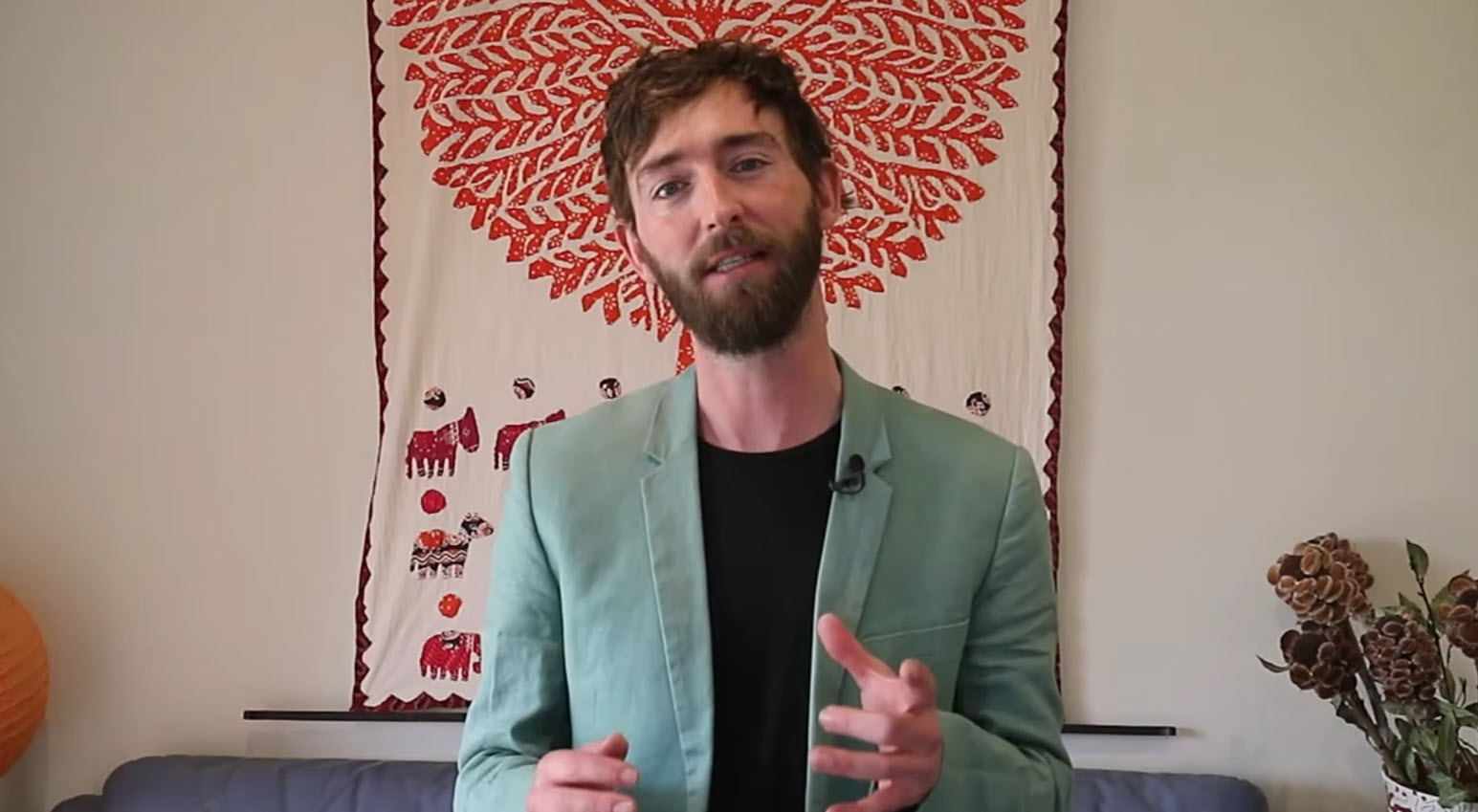
AI can accelerate insurance work, but who will develop tomorrow’s judgement? At ANZIIF’s International Summit, Future Crunch founder Tāne Hunter explores why technological progress demands greater investment in distinctly human capabilities.
By Anna Lopata – ANZIIF senior writer
In the cancer lab, Tāne Hunter learned to be wary of a beautiful answer.
Working with machine learning to investigate the billions of letters in human DNA, he saw algorithms uncover patterns that researchers could never have identified unaided.
He also saw results that looked compelling, complete with impressive statistics, turn out to reflect problems with the samples or data.
The difference depended on someone knowing enough to pause.
“What that taught me is that the machine was never the scientist,” Hunter says. “The machine was the microscope.”
Its value depended on the person deciding where to point it and whether to believe what came back.
For insurance leaders adopting AI, that distinction raises a question extending beyond efficiency: if technology takes over the work through which people develop judgement, how will the next generation learn to question its answers?
A winding route to the future
Hunter’s path to that question began far from an insurance conference.
Raised by academic parents in Las Cruces, New Mexico, he describes his younger self as a science nerd with a bowl haircut and a rat-tail. Biology was his first intellectual love, but mountain biking became his first career.
He won a national mountain bike championship at 19 in 2004, before a serious back injury closed that chapter. After returning to biology and chemistry, he spent a couple of years sailing and eventually arrived in Melbourne, where bioinformatics studies led him into cancer research.
There, another discrepancy caught his attention.
During the day, he encountered extraordinary scientific and technological progress. At night, his news feed presented a world seemingly coming apart.
Future Crunch emerged from his desire to tell the other half of the story: evidence-based accounts of human progress that acknowledged serious problems while examining the tools available to address them.
An unpaid presentation in June 2013 led to an unexpected offer: someone would pay to hear more. More than 500 keynotes across five continents later, science communication has become his career.
He is also the co-author, with Dara Simkin, of Full Stack Human (Wiley, 2026)*.
The question connecting that work is how people remain human as technology accelerates around them.
The missing rungs on the ladder
Hunter believes one of AI’s most consequential effects in insurance may be easy to overlook.
“AI isn’t really breaking the job,” he says. “It’s breaking the apprenticeships, those lower rungs on the career ladder.”
Insurance professionals develop their craft through repeated exposure to claims, risks and decisions. Reading another file can feel routine, until something seems wrong and experience helps explain why.
Yet repetitive work is precisely what AI can perform quickly and effectively.
Removing it may create immediate efficiencies while weakening the pathway through which junior employees acquire expertise. As experienced professionals retire, organisations could discover that the work is moving faster but fewer people understand it deeply.
Hunter wants leaders to ask what their people will become good at as technology takes on more tasks.
“For each task, is AI doing it for your people, or making them better at it?”
The distinction is between receiving an answer and developing the ability to reach, assess or challenge one.
Learning opportunities that once emerged through everyday work will increasingly need to be designed deliberately.
What humans bring to the claim
At ANZIIF’s International Summit in 2027, Hunter will explore five capabilities he believes deserve investment as AI becomes more embedded in work.
Three have particular relevance for insurance.
The first is context intelligence: understanding what information means in a particular situation.
A model may recognise the characteristics of a claim. A person must understand the circumstances behind it, including what displacement, uncertainty and financial pressure mean for a family living in temporary accommodation.
“AI provides the data, human beings provide the context,” he says. “We provide the meaning.”
The second is bias literacy: recognising the mental shortcuts that influence decisions. Confident, agreeable AI responses can make that skill especially valuable, because an answer that feels reassuring may escape scrutiny.
The third is adaptive intelligence: identifying what remains relevant, letting go of outdated knowledge and consciously changing as circumstances evolve.
Together, these capabilities support something insurance depends on when customers are distressed: feeling understood.
“When someone is standing on a flooded kitchen floor, they don’t want a faster form,” Hunter says. “They want to feel that a human being understood them.”
Optimism that survives bad news
Hunter’s confidence in human capability comes with a demanding definition of optimism.
“Wishful thinking asks you to look the other way. Intelligent optimism asks you to look closer.”
His approach holds three ideas together: serious problems exist, meaningful progress is happening, and people can act to improve the outcome.
Within the insurance industry, AI can simultaneously create governance challenges, remove burdensome work and open opportunities to redesign how people learn.
The practical question is what to do with that knowledge.
“Does your optimism survive contact with bad data? And does it come up with something you can do on Monday morning?” he asks. “If not, it’s a horoscope.”
Insurance professionals, he suggests, already understand the relationship between acknowledging danger and enabling action. Assessing what could go wrong helps people move forward.
Make room to question
Turning that outlook into innovation also requires leaders to examine everyday working conditions.
Hunter encourages space for reflection, opportunities to build on colleagues’ ideas before critiquing them, and small experiments whose value may extend beyond immediate throughput.
“Above all, leaders need to make it safe to experiment and get things wrong while the stakes are low.”
His Summit presentation will bring these themes together through science, stories from the cancer lab and humour.
Delegates can expect a perspective on AI’s effects on work, human capabilities worth developing and something practical to try.
Most of all, Hunter wants them to leave with a sense that they can help shape what happens next.
“Stay curious, stay kind, and stay human,” he says. “Because the world needs it, and so do insurers.”
*The book Full Stack Human is at the epicenter of the research and the speech. You can add this or not, up to you.

0 Comments