





0.25 CIP Points


Shine protection for jewellery insurance brokers
Jewellery and watches are among the most expensive portable items people ever own, in terms of both financial and sentimental value. Unsurprisingly, they are also the items most often burgled from homes and lost, damaged or stolen during holidays. Yet...
 02 Nov 2023

 3 mins read
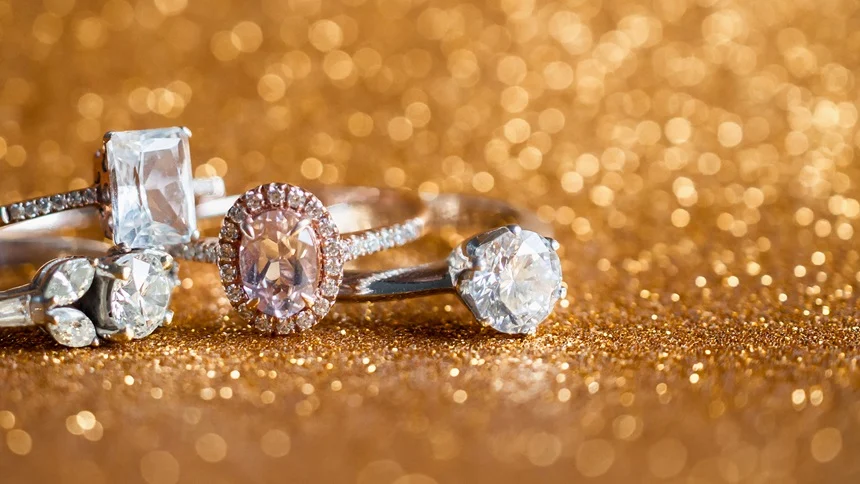
Jewellery and watches are among the most expensive portable items people ever own, in terms of both financial and sentimental value. Unsurprisingly, they are also the items most often burgled from homes and lost, damaged or stolen during holidays.
Yet research reveals 68 per cent of Australians don’t have insurance for the valuables they take on holiday. Likewise, even though Australians spend an average of A$6,000 on an engagement ring, almost half are uninsured.
In Hong Kong and Singapore, there’s even less proclivity to insure jewellery, possibly due to low crime rates and the public’s perception of risk, says Rhiannon Alban-Davies, insurance broker for Fine Art, Jewellery and Specie at Willis Towers Watson Hong Kong.
“People often think insurance is only for theft,” she says. “They don’t realise it covers accidental loss or damage, mysterious disappearances and other events as well.”
Replacement vs indemnity cover
For those who do insure their jewellery, the various policy options can cause confusion — and ultimately, disappointment when claims are settled contrary to expectations.
In Australia and New Zealand, insurance products can be specifically designed to cover jewellery. Customers wanting to protect high-value items can also purchase add-on insurance at the point of sale, underwritten by specialist jewellery insurers.
Despite the availability of such options, many people simply insure their jewellery through household or renters’ policies, which fall into two categories: replacement cover and indemnity cover, explains Paul Nilsson, owner of GemLab Diamond Graders and Jewellery Valuers in Auckland.
“Traditionally, valuers here, as well as in Australia and the UK, tend to value modern jewellery for replacement with a new item like it, but some people buy cheap policies that only cover them for the indemnity value, which is either the retail market value of the item or its replacement value less depreciation,” he says.
“The client might get something valued at $5,000 and add it onto their policy, without knowing that the maximum they’re ever going to get paid out is $2,000, because they only have cover at the indemnity value level.”
Nilsson also says valuers too often decide arbitrarily that an estate or antique item can’t be replaced with an equivalent new item, and so only value it at the (usually lower) market value. Replacement policies can also default to an indemnity settlement when cash is requested instead of a replacement, or an item isn’t specified on a policy.
Though mass-market jewellery insurance isn’t as common in Hong Kong and Singapore, customers can purchase specialist cover, but only for higher-end collections typically worth around US$20,000-plus, says Alban-Davies. Otherwise, jewellery can be included in a standard household policy, albeit with limitations.
“Under a household policy, there would be no cover for depreciation, such as if you lost one of your stones and couldn’t replace it like for like, and you also have to watch out for per-article limits,” she explains.
Such policies also tend to have exclusions for unexplained and accidental loss.
“It can give the perception to the public that insurance doesn’t pay for jewellery,” adds Alban-Davies. “Brokers have to combat that by explaining insurance is not just about theft, and also design a policy that is broad and doesn’t have any exclusion for mysterious disappearance or unexplained losses.”
A better solution
Since the 1990s, GemLab has included both replacement and indemnity values on all of its jewellery valuations, in the hope of giving customers greater insight into the different ways an insurer might settle a claim.
“Sometimes people have gone back to their insurer, found out they were only covered for indemnity and have had the opportunity to upgrade their policy,” says Nilsson.
He believes brokers should follow this lead and be more proactive about educating customers — ensuring they have up-to-date valuations and proof-of-purchase or ownership documentation, in line with their policy’s requirements.
Similarly, Nilsson says it’s important to highlight cover limits, including both single-item and event limits, given that customers are often caught out by the latter.
“Let’s say Mrs Smith has $250,000 worth of jewellery and she’s listed her $10,000 ring and $7,000 bracelet on the policy but not the rest of her jewellery, which is mostly worth less than $3,000.
She thinks she doesn’t have to worry about getting that valued, but she actually needs to prove what it was and what it was worth when she makes a claim. Otherwise, she’ll get paid out for her ring and bracelet, but the rest of the jewellery lost in the burglary will be capped at the event limit.”
Covering all bases
Another factor that brokers need to consider when designing a jewellery policy is how the items will be used and where they will be stored.
“Insurers can be cautious about where items are kept, whether in a safe, a bank or a professional storage facility,” says Alban-Davies.
Even if customers store jewellery in a safe deposit box, she warns that storage facilities may exclude insurance or have a cover limit. She points to the 2015 theft of millions of pounds’ worth of jewellery from a vault in Hatton Garden, central London, when many owners were uninsured.
“Don’t just assume the bank or storage facility is going to cover a customer if something happens,” she urges.
Like Alban-Davies, Nilsson thinks brokers could play a bigger role in ensuring customers are properly protected. “This is particularly important with something that can be as emotive as jewellery,” he adds. “People don’t care if their TV gets stolen, but they’re a bit more upset when it’s grandma’s diamond ring.”
All about the ring
AAMI research shows:
- More than 20 per cent of Australians who own wedding / engagement / eternity rings do not insure them, even though the average engagement ring costs around A$6,000 — more than three times the average weekly full-time wage.
- Thirty-five per cent of research respondents have lost or misplaced their ring at least once.
- Of those who have insured their rings:
- more than 60 per cent did so prior to or immediately after the proposal
- 20 per cent waited until their home and contents insurance was next due
- 10 per cent only insured their ring when prompted by family and friends.
Source: Suncorp Corporate Affairs — Insurance Research, conducted by Kantar Insights in December 2021, sampling n=1,047 nationally representative Australians.
Jewellery insurance: emerging risks and resolutions
1. Smart watches and fitness wearables: popular devices from brands such as Garmin and Apple can cost upwards of A$500.
Insurance solutions: portable contents cover, brand-specific cover (e.g. AppleCare), device cover (e.g. DevicEnsure).
2. Lab-grown diamonds: lab-grown diamonds are soaring in popularity, featuring in one in four engagement rings bought in the United States in 2021.
Insurance solutions: lab-grown diamond cover.
3. Loose investment gems stored in vaults: thefts from storage facilities can leave owners vulnerable if they don’t have appropriate cover.
Insurance solutions: storage-facility policies (with top-up cover if necessary) or personal jewellery policies that specify the storage location (with lower ‘safe’ rates reflected accordingly).
Read this article and all the other articles from the latest issue of the Journal e-magazine
Read issue 3 of the Journal
0 Comments