





0.25 CIP Points


Counting the cost of insurance
IN SHORT Insurance has become less affordable owing to inflation, supply chain disruptions and other external factors, combined with a series of extreme weather events. The people who live in flood- and bushfire-prone areas are often also the households least...
 24 Aug 2023

 5 mins read
IN SHORT
- Insurance has become less affordable owing to inflation, supply chain disruptions and other external factors, combined with a series of extreme weather events.
- The people who live in flood- and bushfire-prone areas are often also the households least able to afford pricey insurance.
- In the short to medium term, subsidised mitigation work and access to basic cover can contribute to longer-term insurance affordability; in the long term, better settlement planning and building standards are essential.
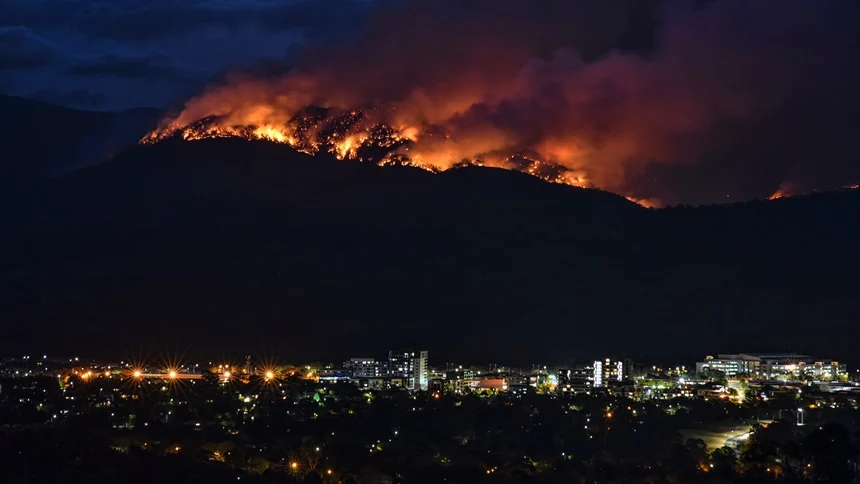
For one or two weeks when bushfires rage or storms roll in — followed by stormwater and flooding — every news headline is dominated by the devastation. For the communities involved, however, the trauma and recovery long outlast the news cycle.
Those people lucky enough to have insurance lodge their claims, get quotes and join the months-long wait list for tradespeople, hoping to have a habitable home, replacement belongings and functional workplaces once again.
Formany, the annual insurance renewal after an event is the sting in the tail.
“Price increases from insurers during 2022 have been averaging 10–15 per cent, including covering for the inflationary effects on the labour and material costs. However, there are pockets in the market that have experienced higher pricing changes,” says Kaise Stephan, partner, Actuarial & Insurance Solutions, Deloitte Consulting. “Further price increases are expected in 2023 in anticipation of ongoing but moderating inflation and higher natural catastrophe and reinsurance costs.”
Faced with significant premium increases, some customers opt to pay higher excesses; others choose to leave off flood cover and ‘self-insure’; others abandon their insurance altogether.
According to the independent lobby group Climate Council, by 2030 up to 500,000 Australian homes may be uninsurable because of climate change and extreme weather events.
This is because either insurance premiums will be too expensive for homeowners, or they will be refused insurance cover entirely. Meanwhile, New Zealand’s first national adaptation plan says homes worth a total of NZ$100 billion are at risk of flood, potentially impacting 675,000 New Zealanders.
Piling on costs
Part of the increase in insurance premiums comes down to external factors impacting the entire global economy, which also explains why properties outside of high-risk zones are seeing higher premiums.
Deloitte’s Stephan says these factors include: increases in costs for material, parts and labour; supply chain issues (“which most insurers are still dealing with”); three La Niña weather patterns in the past three years; heavy flooding along the east coast of Australia; an elevated frequency of smaller weather events; a war in Europe; rising reinsurance rates; labour shortages and wage inflation; and the adoption of the new insurance accounting standard IFRS 17.
“All of these factors are aligning and driving increases in insurance costs and claims and hence in insurance premiums, particularly for short-tail lines such as home and motor,” he says.
“Irrespective of flood risk, the increasing value of a property will also affect a customer’s annual premium,” adds an Insurance Council of Australia (ICA) spokesperson. “For example, a home built 10 years ago for A$300,000 cannot be built for the same amount today.”
These factors also drive up the cost of claims for insurers.
An additional factor is the hardening reinsurance market. S&P Global says climate risk is one of the region’s top three threats.
After a spate of costly natural disasters in 2022 and early 2023, reinsurers are charging more. Insurers are forced to make greater allowances for future natural disaster events, while increasing their own risk-retention levels.
Right now: build resilience
Insurance affordability is clearly a complex problem. Scott Hawkins, managing director at Munich Re Australia, sees the solution involving a combination of short-, medium- and long-term interventions.
Given that we are working with existing building stock, the first approach should be to make those buildings and communities more resilient, he says. To achieve that, some temporary government subsidies may be required to help those property owners who are least able to afford mitigation measures.
Munich Re is part of the Australian Business Roundtable for Disaster Resilience and Safer Communities. The roundtable found that every dollar spent on mitigation can save at least two dollars in recovery costs.
“What’s also important is that we keep adequate risk signals, so we know what the expected cost is from claims on properties,” says Hawkins.
The ICA says it welcomed the establishment of the Disaster Ready Fund (DRF), which began providing up to A$200 million annually to be invested in disaster mitigation for five years, from July 2023. However, the ICA is calling for this funding to be extended to a 10-year, indexed rolling program.
“An ongoing DRF would ensure that Australians receive the benefits of resilience and mitigation investment for years to come, and allow governments and communities to plan for long-term projects that put downward pressure on insurance premiums,” says the spokesperson.
Medium-term goals — greater insurance penetration
While existing homes are improved and risks mitigated through community activities and investment in infrastructure such as planned burning to reduce bushfire fuel, and drainage systems and levees to address flood risk, property owners still need insurance.
In its August 2022 green paper, Home insurance affordability and socioeconomic equity in a changing climate, the Australian Actuaries Institute noted that there is an overlap between areas with high insurance premiums and people with low incomes.
Essentially, low-income households are often only able to afford homes that may be built on flood plains or located in outer or rural suburbs with greater risk of bushfire.
Says Hawkins: “I’m passionate about creating mechanisms that increase the penetration of insurance. We need more people to have basic insurance cover in place.”
The green paper recommends subsidised insurance for low-income households. At the same time, some state taxes and charges on insurance such as stamp duty that are inflating insurance premiums could be removed. The ICA observes, for example, that the Emergency Services Levy in New South Wales adds around 18 per cent to home insurance premiums and up to 40 per cent to business cover.
The long view
Risk mitigation should result in more resilient housing and infrastructure, and a broader insurance base will result in a more resilient community.
But today’s children, and their children’s children, will face even greater impacts from climate change. They deserve housing that is designed with this future world in mind.
Here, insurers can work with government to ensure new settlements aren’t located in high-risk areas — the data and risk modelling the industry has been collecting will be invaluable once shared.
The ICA has called on state governments to amend land use planning legislation to include a mandatory requirement for planning approvals to consider property and community resilience to extreme weather and to improve building codes so future homes are made more resilient.
Hawkins agrees with the proposal. “The building standards being applied today may not be fit for purpose for our future homes.
Insurers can help inform these new requirements, so that today’s mitigation efforts are built into our planning.”
Government help
If local insurers can’t afford to take on natural disaster risks, should we turn to government to step in? In some countries (including the United States and Canada), government provides flood cover, commonly in partnership with insurers.
In New Zealand, Toka Tū Ake EQC (the Earthquake Commission) provides limited cover for damage from earthquakes, volcanic eruptions, hydrothermal activity, storms, floods, tsunamis and landslips.
However, it’s only for homeowners who have private insurance that includes fire insurance, and it
doesn’t cover flood damage within a property.
In Australia, the Australian Reinsurance Pool Corporation (ARPC) extended its operations to cover cyclone events from July 2022, but again, it links reinsurance aid to existing insurance policies. Non-cyclone-related flooding is also not eligible for ARPC relief.
Stephan says some government–private sector initiatives have been well accepted. “However, these collaborations should not be treated as a set-and-forget solution but should be adjusted regularly through two-way consultation and dialogue between the insurance industry and government to ensure that the solutions remain appropriate and, in the longer term, achieve the intended insurance affordability outcomes.”
Hawkins warns that government-run insurance pooling is no panacea.
“It’s really a redistribution of who pays, and if the costs go beyond the premiums collected, then it’s the taxpayer who foots the bill,” he says. “It can also mask the risk signals the insurance market needs to price risk correctly.”
Futureproofing affordable insurance
Perhaps one example of a bridging solution comes from the United Kingdom, where not-for-profit scheme Flood Re is buying homeowners and insurers time.
The scheme — a joint initiative between insurers and the government — is funded by insurers, to pool the risk for customers at high risk of flooding. Premiums are linked to council tax bands, so the cover targets low-income households.
The fund is designed to run for 25 years (until 2039), at which point the goal is for the free market to offer and maintain affordable flood insurance options.
To prevent bad planning leading to yet more homes built on flood plains, Flood Re only covers homes built prior to 2009.
If a flooded home is rebuilt, the fund can tip in £10,000 (A$18,600) over the like-for-like repairs to go towards resilience and mitigation improvements.
On a recent visit to the United States as part of a UK government trade delegation, Flood Re CEO Andy Bord stressed the “global nature of the challenges around flood and the need for international collaboration and sharing of best practice”.
He said that Flood Re’s success underlines that “by placing resilience at the heart of housing and building policy, it is possible to reduce householders’ vulnerability to extreme weather events and help communities reap the benefits of a safe, better-planned built environment.”
Planning with risk in mind
Following earthquakes in Christchurch in 2010 and 2011, officials deemed certain areas as at high risk of future damage. The decision was made not to rebuild in this ‘red zone’.
The government purchased close on 8,000 properties through voluntary buyouts.
The buildings were demolished and residents were relocated to different, safer areas of the city. The red zone is now a green belt.
“We can certainly work with government to help ensure we identify locations where we shouldn’t build in the future. That’s where the industry certainly has very valuable data,” says Scott Hawkins, managing director of Munich Re Australia.
“The New South Wales Government has put a similar buyout process in place for some of the properties in Lismore. That’s an example of working to try and improve the future situation.”
Investing in risk mitigation works
From 2010 to 2012, Roma in Queensland was flooded repeatedly, when the Bungil Creek broke its banks. In 2014, the Queensland Government began work on an A$8.3 million levee to protect the town.
On completion of the works, the flood risk for more than 500 properties was downgraded.
Says an Insurance Council of Australia (ICA) spokesperson: “Premiums dropped by an average of 34 per cent, and a joint program between the Queensland and federal governments to improve the resilience of homes to extreme weather in that state saw reductions of up to 25 per cent.”
Read this article and all the other articles from the latest issue of the Journal e-magazine
Read issue 2 of the Journal
0 Comments