





0.25 CIP Points


Why the rising risk of sportswashing is lose–lose
Across numerous sports right now, there is examination ranging from balanced discussion to fierce, polarising debate about what is acceptable and what is out of bounds in terms of sponsorship. For example, in late 2022 Netball Australia faced an uncertain future...
 02 Nov 2023

 4 mins read
Across numerous sports right now, there is examination ranging from balanced discussion to fierce, polarising debate about what is acceptable and what is out of bounds in terms of sponsorship.
For example, in late 2022 Netball Australia faced an uncertain future before being bailed out by funding from the Victorian Government following a sponsorship row over a four-year, A$15 million deal with Gina Rinehart’s Hancock Prospecting. Hancock Prospecting pulled out of the deal after players expressed concern over historic comments about First Nations Australians by Lang Hancock, Rinehart’s late father.
Similarly, Surf Life Saving Australia’s partnership with petroleum company Ampol has raised more than a few eyebrows — a fossil fuel company coming together with a not-for-profit organisation that exists at the point where the ocean meets the land. And New Zealand Rugby has also faced questions with its “perfect match” partnership with global petrochemical giant INEOS.
Critics might describe these sponsorship arrangements as ‘sportswashing’, where a sponsor benefits from the positive association — and fans’ obsession — with a sport or club, improving its reputation.
Saudi Arabia in the spotlight
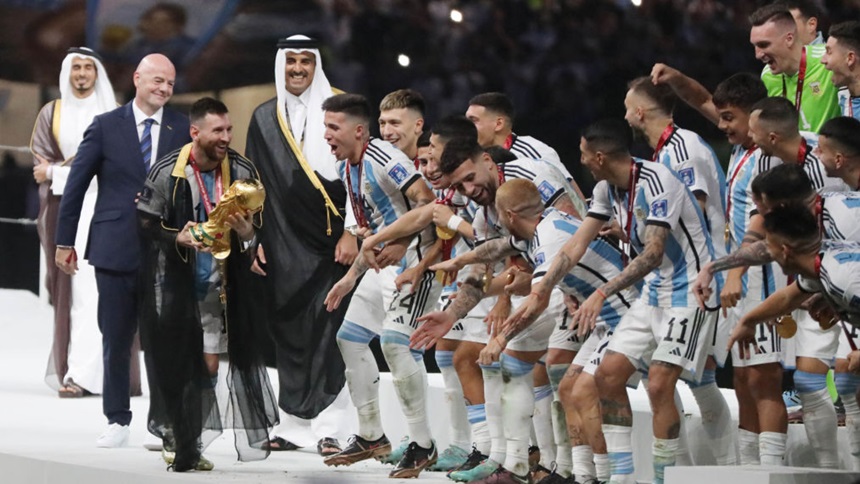
It’s not just brands that engage in sportswashing. Numerous sponsorship deals in Australasia and globally are causing friction because of their links to Saudi Arabia. Saudi is connecting itself with Formula 1 racing, boxing, the world’s richest horse race and even World Wrestling Entertainment.
Some of the world’s best footballers, including Cristiano Ronaldo, Karim Benzema and N’Golo Kante, are finding themselves attracted to the Saudi Pro League, thanks to a promise of previously unimaginable paydays.
“It has always been known that Saudi had a terrible human rights record,” says Dr James Farmer KC, a New Zealand-based barrister. “It’s not the only country with human rights issues, but it is possibly one of the worst.
“I think what Saudi Arabia has set out to do in recent years is to buy a reputation. That’s where the term sportswashing comes in. When it happens, people in and around the sport object to being ‘bought off’ by large sums of money.”
Farmer points to the PGA’s deal with Saudi-backed LIV Golf and more particularly to the hundreds of millions of dollars reportedly paid to top golfers to entice them to join the LIV tour. “But then a number of other golfers said ‘No, we don’t want to belong to that sort of organisation’,” he says.
“Now the PGA has made a deal with LIV Golf, many golfers who stuck to their principles feel aggrieved and let down.”
A similar challenge has arisen with the America’s Cup sailing competition, which Team New Zealand is defending. A compulsory regatta for participants has been scheduled to take place in Jeddah, Saudi Arabia, in November 2023.
“New Zealand prides itself on its human rights record, and on the fact that we were the first country in the world to give women the vote,” says Farmer. “Now, as defender of the cup, Team New Zealand has agreed that there will be a preliminary regatta in Saudi Arabia.
“The Americans made a very strong case as to why there will be safety concerns. How can you have security arrangements in place for a sailing event? The Americans simply won’t go and they’ll take any penalties on the chin, which is grossly unfair to them, to the supporters and to the sport.”
Big rewards, bigger risk
Dean Carrigan, partner with law firm Clyde & Co, is a veteran of three decades of global insurance and reinsurance experience. Originally from Britain, he first saw the sportswashing issue develop in the English Premier League.
In 2003, when Russian-born oligarch and politician Roman Abramovich purchased Chelsea Football Club, it was the beginning of attempts by investors to be allied with a particular sporting brand to help shape their own image, says Carrigan.
“We’ve seen other examples of that, most particularly with the investment into Manchester City [owned by Sheikh Mansour, deputy prime minister of the United Arab Emirates and member of Abu Dhabi’s ruling family] and the enormous opposition from fans when that first happened,” he says.
Similar concerns have been raised about Premier League club Newcastle United, now majority owned by Saudi Arabia’s Public Investment Fund.

Related articles

 0.25CIP Points
 Journal Directory
ANZIIF Journal Vol 47, Issue 3 We are excited to present Issue 3 of the...
 1 min read
 0.25CIP Points
 How insurers are using smart-home technology
In short A flooded house was the last thing Melbourne homeowner Ash Grove expected to...
5 mins read
 0.25CIP Points
 How to engage young customers
In short Getting young people interested in life insurance cover for events they don’t expect...
3 mins read
0 Comments