





0.25 CIP Points


Insurance for a sustainable future
If renewable energy is an essential ingredient in our planet’s future, renewable generation facilities and related businesses require insurance solutions customised to their particular needs. At a conventional, coal-fired power station, there are typically hundreds of employees working on and...
 03 Sep 2024

 3 mins read
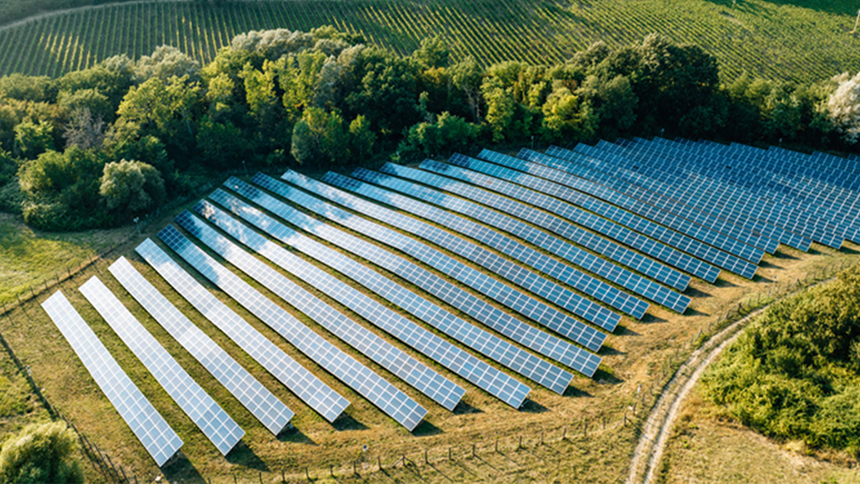
If renewable energy is an essential ingredient in our planet’s future, renewable generation facilities and related businesses require insurance solutions customised to their particular needs.
At a conventional, coal-fired power station, there are typically hundreds of employees working on and around complex industrial machinery.
Huge volumes of coal are stockpiled in boiler bunkers, ready to be crushed in pulverisers and then burned in the boilers.
Super-heated steam is transported via pipes under incredible pressure to rotate the finely tuned blades of a steam turbine that in turn spin a rotor in a generator, creating an electric current.
In that traditional model, there is an obvious and significant physical risk on top of various other risks. When you’re generating electricity to power thousands of homes and businesses, business interruption takes on an entirely new meaning.
So, is risk dramatically reduced in the renewable space, such as a solar farm in which there are few to no moving parts ?
“In a conventional power station, you’ve got much more pronounced human risk,” says Ben Humphries, head of Power and Energy at BMS Risk Solutions. “There’s personnel risk, people hurting themselves, those sorts of things.
“With renewables, you don’t generally have that. An operational solar farm, for example, might have less than 10 people on-site at any one time.”
On the other hand, Humphries says, a coal-fired power station is bounded by four walls, meaning most risk is contained within a discrete project area. That’s not the case with renewable generation facilities such as solar farms.
However, solar projects do have potential risks. Humphries points to a conversation with an insurer on a recent solar farm project which looked at the risk from vegetation management practices on a site spanning many hundreds of hectares.
Electrical infrastructure — including DC cabling that, in the event of a short circuit, could heat plastics which could melt and drip into the grass below, an environment conducive to bushfire.
“They asked why the grass can’t be kept short — ideally at less than 100 mm in the entire project area,” he says. “I overlaid a scaled map of the project site on a map of Sydney and this single solar farm, not even one of the largest in Australia, stretched from Circular Quay to Bondi Junction.
“This highlights the need for proactive processes and procedures to mitigate risk — from vegetation management to emergency procedures, among others.”
Weather: friend and foe
For renewable energy generators to work, they are, by their very nature exposed to the weather, particularly the sunlight and wind. Typically, they cover large areas of land.
Of course, that exposure can incite the risk of damage from weather events.

0 Comments