





0.25 CIP Points


Life on a hotter, more polluted planet
IN SHORT Climate change will affect populations in different ways, depending on their geography, demographics and health status. Insurers need to identify which impacts will have the biggest effects on their business. New approaches such as microinsurance, parametric risk transfer...
 23 Aug 2023

 3 mins read
IN SHORT
- Climate change will affect populations in different ways, depending on their geography, demographics and health status.
- Insurers need to identify which impacts will have the biggest effects on their business.
- New approaches such as microinsurance, parametric risk transfer solutions and digital technology could help insurers to close the protection gap.
From vaccinations to industrialisation and even pasturisation of cows’ milk, history holds plenty of examples of human interventions that have dramatically increased, or reduced, humanity’s life span. However, according to Dr Irene Merk, emerging risks ambassador at SCOR, the magnitude of climate change may have an even greater impact on how long we can all expect to live.
“Most importantly, it’s happening faster than the ecosystem can adapt, leading to disruption and higher volatility,” Dr Merk says. “This means that projections of future morbidity and mortality are becoming more challenging, and we are increasingly likely to need protection and resilience against shock events and trends. It’s therefore imperative that companies with long-term business interests, such as life insurers, work towards an understanding of climate change and its direct and indirect impacts on their businesses.”
Complex and variable
The impact of climate change on health and longevity will be complex and multifaceted — in part because its effects are so variable.
“We expect regional disparities to be pronounced,” says Priya Dwarakanath, Swiss Re’s head of Life Research and Strategic Forecasting. “The socio-economic differences in mortality outcomes we can already see may become more pronounced if those in higher income brackets have more access to mitigation measures and healthcare services. There is also likely to be a bigger threat to clinically vulnerable people, including those with comorbidities, the elderly, the disabled, pregnant women and children.”
Swiss Re has also found that, while the effects of climate change on morbidity are gradual and slow-moving, the consequences could be felt for many decades.
Damien Mu, CEO and managing director of AIA Australia, is yet to see a direct connection between climate change and claims experience, though he has no doubt that related health impacts will develop over time.
“We are particularly concerned about the impact on chronic conditions, as these are our major cause of insurance claims,” he says.
“For example, in Australia, heatwaves, bushfires, floods and droughts can all affect chronic conditions such as respiratory and cardiac disease directly.
They can also have indirect effects through changes to food availability, as well as a major impact on mental health.”
Identifying the risks to business
Life insurers should all be clear about the ways climate change will affect their business. “This will depend on the individual profile of the insurer and can only be assessed on a case-by-case basis,” says Merk.
She outlines five major areas to consider:
- The type of insurance product.
For example, vector-borne infectious diseases such as malaria and dengue fever are expected to occur more frequently and over a wider geographic range. However, because they are generally non-fatal, this peril is only relevant to disability or medical covers. - The region of the world.
According to the World Bank, South Asia is home to nine of the world’s 10 cities with the worst air pollution. Extreme floods, droughts and hurricanes are unevenly distributed, as are food and water shortages. - The age profile of insurance customers.
The majority of climate change victims will be the very young and the very old. - The health and socio-economic status of customers.
People who can afford life insurance have better socio-economic status and health than average, partly by selection through medical underwriting. However, there are exceptions. Wealth can protect against malnutrition, but not as easily against poor air quality. - Indirect impacts.
These are difficult to gauge and to detect. Mental health, for example, is a very relevant concern for all parts of the population because it is linked to the immune system and also to accidents and suicides.
Shaping the future
At AIA, a greater understanding of the impacts of climate change on human health will be an important factor in future planning, product design and pricing.
“We also take account of the fact that every country, business and individual needs to do what they can to reduce their carbon footprint,” says Mu.
“Reducing the emission of greenhouse gases through better transport, food and energy-use choices can also result in improved health. For example, choosing to walk or cycle rather than drive is good for our physical and mental health, as well as the environment.
We focus on the small things everyone can do — broadly, to look after your own health and wellbeing and, specifically, to reduce your environmental impact.”
Dwarakanath encourages insurers to look for ways to expand access and coverage to more vulnerable consumers by leveraging alternative approaches such as microinsurance, parametric risk transfer solutions in partnership with government organisations, and digital technology.
“These solutions can help to close the protection gap by providing more people with the insurance they need to protect themselves against the negative impacts of climate change,” she says.
“Insurers can also partner with public and private sector stakeholders to gather richer data for mapping and modelling evolving climate, mortality and morbidity trends.
This will support better decision-making around future health outcomes and enable providers to develop life and health insurance products that are more aligned with consumer needs.”
Understanding the risks
From a risk management perspective, Dr Irene Merk from SCOR sees climate change as an umbrella term encompassing wide-ranging perils, including those outlined below. Insurers need to identify the risks most relevant to their business.
Infectious diseases
- The spread of pathogens, parasites and diseases due to climate change and shifts in ecological conditions.
- A much higher burden of climate-sensitive diseases in poorer countries with fewer resources to prevent and treat illnesses.
Extreme heat
- Increased cardiovascular and pulmonary events.
- Parts of the world potentially becoming uninhabitable for humans.
- Disrupted natural defence cycles against, for example, certain insect pests.
Severe weather
- Increasing frequency and severity of events leading to direct loss of life.
- Long-term detrimental impacts on human wellbeing.
- Famine, social unrest and displacement of population groups.
- Stunted economic development.
Air pollution
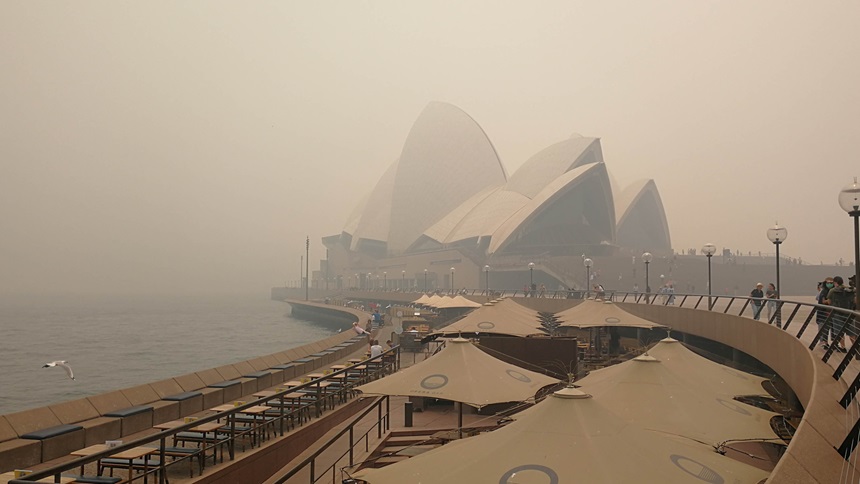
- An increased risk of respiratory infections, heart disease and lung cancer, as well as premature births, due to the surge of pollutants, including those that follow a bushfire.
- Extended length and scope of pollen season.
- Thawing permafrost that releases methane.
Water and food security
- Increased global mortality and morbidity due to poor water quality.
- Forced migrations of populations, as tropical developing regions are hit hardest by climate change.
Indirect impacts
- A greater incidence of mental ill health resulting from the stress of being exposed to extreme weather events, anxiety about the future of the earth, and despair about the destruction of nature.
- Public resources funnelled to reacting, rebuilding and adapting become unavailable for education, public health and prevention.
Read this article and all the other articles from the latest issue of the Journal e-magazine
Read issue 3 of the Journal
0 Comments